

Rio de Janeiro, Brazil (The Adobo Chronicles) – The 2014 World Cup concludes with the final match between Germany and Argentina this Sunday. Already, all eyes are focused on the 2018 World Cup.
Earlier, Russia won the bid to host the next World Cup, but mounting concern about the country’s human rights record has forced FIFA (Fédération Internationale de Football Association) to cancel the winning bid and name an alternative venue for 2018 soccer games.
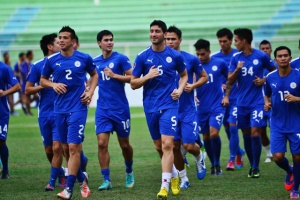
In an announcement that stunned the world football community, FIFA has named the Philippines as the new venue for the 2018 World Cup. Unknown to many, the Philippines does have its national football team named ‘Azkals,’ which is ranked 129th by FIFA. Whether or not the Azkals can qualify for the 2018 games is not an issue. Rather it is all about the venue.
This year, the Philippines will inaugurate the Philippine Arena located in Bocaue, Bulacan, just 14 miles north of Manila. It is owned by the filthy rich religious group, Iglesia Ni Cristo (Church of Christ), which accounts for just about 3% of all religious denominations in the country.
FIFA was very impressed with the enormity of the domed structure. Using the arena as the venue for the World Cup was the deal breaker in the decision to award the Philippines the hosting rights for 2018.
The 74,000 square meter indoor arena has a seating capacity of 50,000, way above the FIFA standard of 30,000 for its World Cup venues. Once completed, the Philippine Arena will be the largest domed structure in the world. In comparison, the Madison Square Garden in New York could only sit 20,000 people, while the Staples Center in Los Angeles has a capacity of 21,000.
Designed by Kansas City-based architecture firm Populous, construction is being carried out by South Korea’s Hanwha Engineering and Construction Corp. and is expected to be completed in time to mark the church’s centennial celebration this year.The church said it plans to use the arena for religious gatherings, except in 2018 when it will rent out the arena to FIFA.
It’s not only “more fun in the Philippines” (the Philippine Department of Tourism meme). It’s also bigger and better in this island nation.
See related story: World Cup, The Battle Between Two Popes.
 Atlanta, Georgia (The Adobo Chronicles) – Coca Cola’s most ambitious promo campaign to date is coming back to haunt the giant soda company, and its rival Pepsi is reaping all the benefits.
 The Adobo Chronicles
You must be logged in to post a comment.