

WASHINGTON, D.C. (The Adobo Chronicles) – It’s hard enough remembering when to ‘spring forward’ or ‘fall back,’ but having to change your clocks twice a year can make your life off balance. All because of this thing called ‘Daylight Saving Time (DST).’
It confuses Americans, considering that not all of the 50 states observe this ridiculous back and forth exercise, not to mention that they already have to deal with Pacific, Mountain, Central and Eastern time zones.
Well, think about the International Dateline, where countries east and west of this imaginary dividing line over land and water have to calculate the time and day differences between and among each other. 16 hours ahead. 9 hours behind. It’s already Tuesday here, and only Monday there. And if you’re a frequent world traveler, it’s a constant nightmare!
Most people think that DST is an energy-saving measure in the United States. Wrong. In the U.S., Daylight Saving Time – or “fast time”, as it was called then – was first introduced in 1918 when President Woodrow Wilson signed it into law to support the war effort during World War I.
Despite DST, Americans still waste a lot of energy by constantly plugging in their smart phones to recharge, never turning off their desktop computers, indiscriminately turning on their heaters and airconditioners and constantly driving to the supermarket located three blocks away.
Workers are fashionably late during ‘spring forward,’ but are also late during ‘fall back.’ Travelers miss their flight connections, employees miss their morning staff meetings, and women (and men) show up late for their dinner dates. It’s an epidemic of total mess!
The U.S. government is fed up with all the complaints. So effective in 2016, it will totally scrap Daylight Saving Time. Permanently. That means you just have to remember to adjust your clock one more time this fall. And remember it’s ‘fall back!’
What do our readers think? Good riddance, or bad idea?


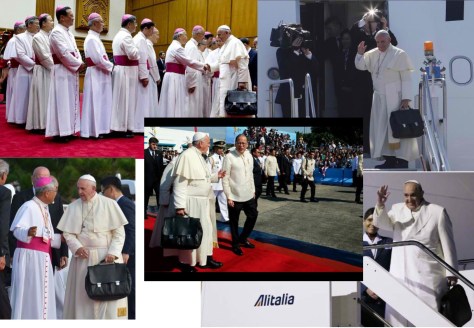 ROME, Italy (The Adobo Chronicles) – Pope Francis’ long flight from Manila to Rome was a great opportunity for journalists to ask the pontiff questions ranging from his impressions of Sri Lanka and the Philippines to the expected Vatican encyclical on climate change to the Pope’s scheduled visit to the U.S. this fall.
 The Adobo Chronicles
You must be logged in to post a comment.