MANILA, Philippines (The Adobo Chronicles® ) – Filipinos cry a lot, laugh a lot, scream a lot, get angry a lot, pray a lot, curse a lot. Come hell or high water, they don’t hold back on expressing emotion, especially in public. Just ask Kris Aquino, actress, television host and presidential sister.
A new U.S. Gallup poll conducted in more than 140 countries to compare how people feel about their lives has ranked the Philippines the most emotional society in the world, beating out El Salvador and Bahrain which came in second and third, respectively.
Upon hearing the news, President NoyNoy Aquino congratulated the Filipino people on yet another feather on their cap. “We’re number one yet again,” the president said, “and it just validates my earlier statement that the Philippines is the new ‘Darling of Asia.’ Now, we are actually the ‘Darling of the world.'”
The same survey ranked Singapore the most emotionless society in the world. Maybe, that’s why the country is among the most successful economies? Go figure.
SAN FRANCISCO, California (The Adobo Chronicles® ) – From San Diego to Miami, from Salt Lake City to Anchorage, gay men and women are celebrating a victory of a lifetime: the U.S. Supreme Court ruling that marriage is a constitutional right for all.
But no other celebration is as big as that of San Francisco, especially among LGBT people of color.
Forget about the wave of rainbow colors enveloping Facebook profile pictures. The San Francisco celebration is big and it involves — what else — food!
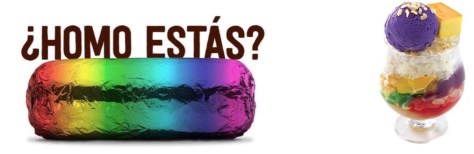
Mexicans can now order their burritos wrapped in shiny, rainbow-colored foil, courtesy of the food chain, Chipotle. A full-page ad in the San Francisco Chronicle even greeted readers with “Homo estás?” (How are y’al doing, homos?).
Filipinos, on the other hand, can now enjoy rainbow-colored ingredients in their halo-halo, the all-time Pinoy favorite dessert/snack, similar to the Hawaiian shaved ice. Don’t forget to ask for an extra scoop of ube, that sweet and creamy purple stuff!
Ah, savour the taste of freedom and equality. Everything is so much more fun living in San Francisco — that is, if you can afford the rent.
PAGO PAGO, American Samoa (The Adobo Chronicles) – The United States Court of Appeals for the District of Columbia has just ruled that the Fourteenth Amendment’s guarantee of birthright citizenship does not apply to island territories including American Samoa.
Agreeing with the Obama administration’s lawyers, the DC Circuit relied on and even expanded the scope of a set of racially-charged, Colonial-era cases that refer to “savages” and “alien races” to reach their decision.
The cited Insular Cases date back to the early 20th century when the US had just won the Spanish-American War and acquired Puerto Rico and the far-flung new territories of Guam and the Philippines. The US acquired American Samoa in two parts in 1900 and 1904 as part of its continued expansion. But American political leaders had a problem: They wanted the United States to become a colonial power, but they didn’t want to extend constitutional protections to the overwhelmingly nonwhite residents of the new territories. (As one of the friend-of-the-court brief in the current case notes, the Democratic Party’s official platform in 1900 argued that “the Filipinos cannot be citizens without endangering our civilization.”)
American Samoa is one of U.S. territories that also include Guam, Puerto Rico, U.S. Virgin Islands and Northern Marianas.
Reacting to the court decision, the American Samoa Fono, the territory’s legislature, unanimously passed an emergency bill requiring all visiting U.S. citizens to apply for an entry visa. The bill was immediately signed by Governor Lolo Letalu Matalasi Moliga.
“If the U.S. doesn’t want us to be citizens, then we don’t want U.S. citizens to freely come and go on our beautiful islands,” Moliga said.
Hollywood actor Dwayne Johnson, star of the new blockbuster movie ‘San Andreas,’ was scheduled to visit American Samoa over the weekend for some R & R, but had to cancel travel plans. Johnson, a U.S. citizen, is part Samoan. He said he is not upset about the new visa requirement. In fact, he is supportive of it, saying the issue “is not just about fairness or birthright citizenship; it is about U.S. colonial mentality that has no place in our modern society.”

 MANILA, Philippines (The Adobo Chronicles® ) – Filipinos cry a lot, laugh a lot, scream a lot, get angry a lot, pray a lot, curse a lot. Come hell or high water, they don’t hold back on expressing emotion, especially in public. Just ask Kris Aquino, actress, television host and presidential sister.
 SAN FRANCISCO, California (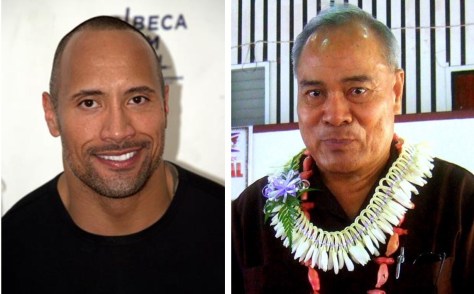
 The Adobo Chronicles
You must be logged in to post a comment.