
 SEATTLE, Washington (The Adobo Chronicles) – If you live in California and are a certified Starbucks fan, you may have noticed that your tall, grande or venti coffee and latte have been tasting different lately. You are not imagining things.
Blame it on Governor Jerry Brown who has instituted a mandatory 25% reduction in the state’s water consumption as a way to deal with the worsening California drought.
As a law-abiding, socially and environmentally-conscious company, the Seattle-based Starbucks has implemented a no-nonsense water conservation measure in all its stores, at least in the state of California.
The measure involves a 25% reduction in the water content of every cup sold at its California stores. This means that your brewed coffee tastes stronger but at the same time, you get 25% less in liquid volume. Stores now also use 25% less ice cubes in their iced coffee.
Many Starbucks coffee fans we talked to didn’t seem to mind the change, but at the same time noticed that they have increased the number of visits to their neigborhood Starbucks store from three to five times daily.
It’s a win-win situation. It helps with the state’s water conservation, it’s good for (Starbucks) business, and consumers get better-tasting coffee.
Click HERE to find out more about Starbucks’ water and energy conservation program.
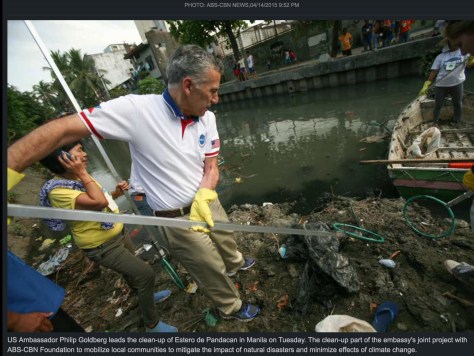 MANILA, Philippines (The Adobo Chronicles) – Last year, the United States and the Philippines signed a 10-year defense agreement, considered by many as one of the clearest signs yet of renewed American engagement in the region at a time when tensions between China and its neighbors have been rising.
 SAN JOSE, California (The Adobo Chronicles) – It is estimated that the average person uses 80-100 gallons of water per day. More than 50% of that usage – 57.25 gallons to be exact — are used on four major daily routines – brushing teeth, taking a shower, flushing the toilet and drinking water.
 The Adobo Chronicles
You must be logged in to post a comment.