
 MANILA, Philippines (The Adobo Chronicles, Manila Bureau) – From sea to shining sea to the white sandy shores of Boracay and Palawan, the war is on against the proliferation of fake news and other misinformation on social media.
At least three Philippine legislators — Senators Francis Pangilinan, Antonio Trillanes and Leila De Lima — have called for a Senate investigation on fake news, especially on the social media giant Facebook.
In the U.S., nymag.com has just published a study listing over 900 Internet sites that are potential sources of fake and biased news, as well as conspiracies and clickbates.
So, in the interest of public service, The Adobo Chronicles has issued these guidelines to help netizens differentiate among fake news, satires, clickbates, etc.
Using tags and labels created by opensources.co, we put together concrete examples — via headlines and photos — of what constitutes fake and other news.
Fake News (tag fake): Sources that entirely fabricate information, disseminate deceptive content, or grossly distort actual news reports:
“Duterte Declares Martial Law”
Satire (tag satire): Sources that use humor, irony, exaggeration, ridicule, and false information to comment on current events:
“Duterte Prays Before Marcos’ Tomb At Libingan Ng Mga Bayani To Seek Guidance In Declaring Martial Law”
Extreme Bias (tag bias): Sources that come from a particular point of view and may rely on propaganda, decontextualized information, and opinions distorted as facts.
“Duterte Plotting To Declare Martial Law, VP Leni Robredo Says”
Conspiracy Theory (tag conspiracy): Sources that are well-known promoters of kooky conspiracy theories.
“Duterte Wants To Oust VP Leni Robredo So Bongbong Marcos Can Take Over”
Rumor Mill (tag rumor): Sources that traffic in rumors, gossip, innuendo, and unverified claims.
“Leni Robredo Traveled To New York To Have An Abortion”
State News (tag state): Sources in repressive states operating under government sanction.
“Martin Andanar Says News Media Misinterpreted Duterte’s Statement”
Junk Science (tag junksci): Sources that promote pseudoscience, metaphysics, naturalistic fallacies, and other scientifically dubious claims.
“People Cooking Rice 24 Hours A Day Causes Smog In Metro Manila”
Hate News (tag hate): Sources that actively promote racism, misogyny, homophobia, and other forms of discrimination.
“Soft Porn Star Mocha Uson Appointed To MTRCB”
Clickbait (tag clickbait): Sources that provide generally credible content, but use exaggerated, misleading, or questionable headlines, social media descriptions, and/or images.

Proceed With Caution (tag unreliable): Sources that may be reliable but whose contents require further verification.
Political (tag political): Sources that provide generally verifiable information in support of certain points of view or political orientations.
“Philippine Stock Market Experiences Boom Under President Duterte”
Credible (tag reliable): Sources that circulate news and information in a manner consistent with traditional and ethical practices in journalism (Remember: even credible sources sometimes rely on clickbait-style headlines or occasionally make mistakes. No news organization is perfect, which is why a healthy news diet consists of multiple sources of information).

Oh, and sometimes:

DISCLAIMER: The examples provided above do not reflect the opinions of the sites and news outlets mentioned.
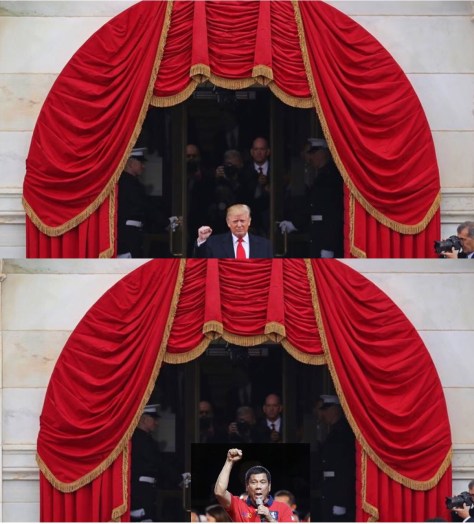 WASHINGTON, D.C. (The Adobo Chronicles, Washington Bureau) – An analysis of the body language of Donald Trump on the day of his inauguration has reinforced a numbe of perceptions about the new president and his wife Melania.
 The Adobo Chronicles
You must be logged in to post a comment.