
Category Archives: Education

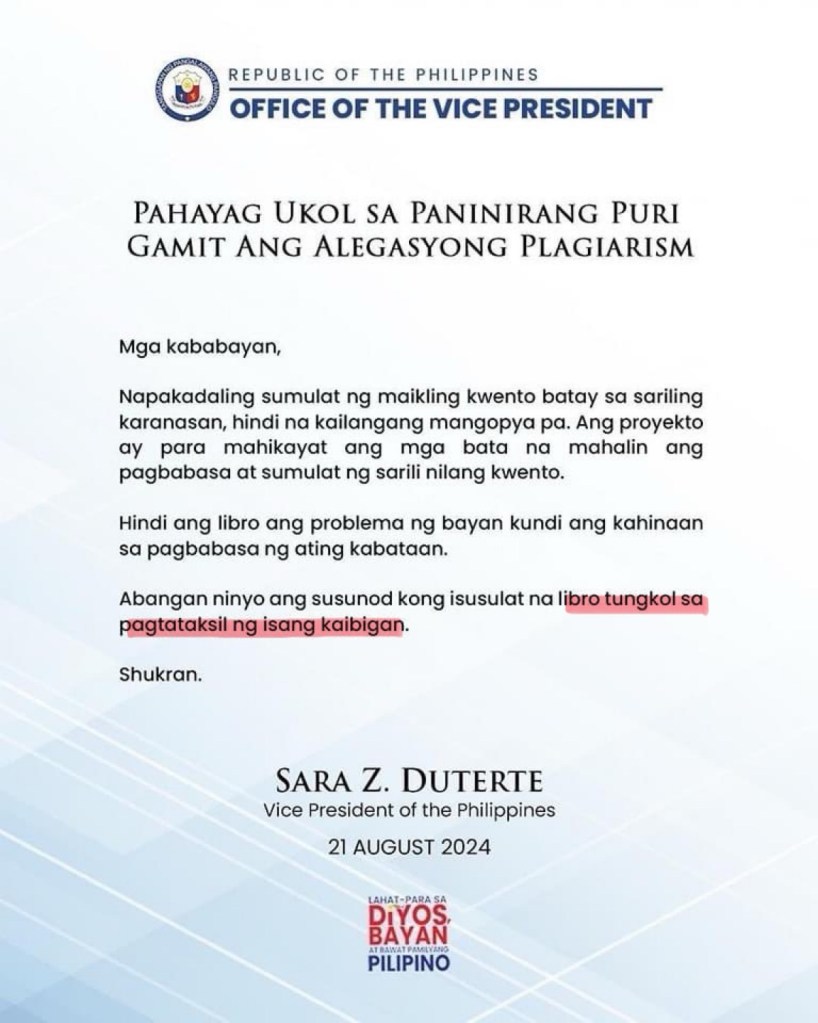
VP Sara Duterte’s Next Children’s Book: “Taksil Na Kaibigan?”

VP Inday Sara Duterte’s latest move is nothing short of genius—self-publishing a children’s book to subtly reinforce her political ambitions, all while avenging her critics. 

The book, which costs taxpayers some P10 million, is clearly a masterpiece in strategic branding. When Senator Risa Hontiveros innocently questioned the book’s content, Duterte didn’t miss a beat, resurrecting old political dramas as though they were yesterday’s news. 

But why stop there? In response to the backlash, she’s now promising a sequel on how to be a “traitor to your friends”—a lesson she’s presumably well-versed in. Surely, these are the kind of moral values we want to instill in our children. Why bother with stories about honesty or bravery when you can teach kids how to navigate the cutthroat world of politics before they can even spell “senator”? Truly, Duterte is ahead of her time.

In Fairness, “No Comment” Is Not Always VP Sara’s Response To Questions (video)

It’s Not Just Filipino Students That Lag Behind…

It’s true that focusing on grammar and linguistic accuracy can be exhausting, especially when there are so many other areas where improvement is needed. The issue of educational quality, particularly in reading, math, science, and critical thinking, is a significant concern in the Philippines. But grammar is just one piece of a larger puzzle. 

Poor grammar among professionals, especially those in news and social media, can reflect deeper issues in the education system. When basic skills are not fully developed, it can impact critical thinking, communication, and even the way we process and interpret information. 

However, being overly focused on grammar alone might distract from addressing the root causes of these broader educational challenges. It’s important to balance the push for linguistic accuracy with efforts to improve overall educational quality, fostering a more well-rounded and critically thinking society. 

This might involve more than just correcting errors—it could mean advocating for better educational resources, promoting reading and analytical skills, and encouraging continuous learning and professional development.