Ah, Rappler, the master of editorializing in the world of news!
While some outlets strive for objectivity and balanced reporting, Rappler has taken a bold step in a different direction. They’ve truly mastered the art of turning even the most mundane news story into a sensational headline. It’s as if they have a team of overenthusiastic clickbait writers on speed dial, ready to transform every minor event into a catastrophic world crisis.
Rappler’s headlines read like melodramatic soap opera teasers, leaving readers wondering if they stumbled upon a news site or a tabloid. “Local Cat Rescues Kitten Stuck in Tree – Is this the End of Feline Independence?” they might scream, as if the fate of the entire cat kingdom rests on this one heroic rescue mission.
But hey, who needs boring old facts and balanced reporting when you can have headlines that make your heart race and your eyeballs pop? Thank you, Rappler, for giving us the daily dose of sensationalism we never knew we needed.
Ah, Raissa Robles, the self-proclaimed historian with an imaginary flair for storytelling. Her desperate attempts to salvage her flop of a book on the Marcos Martial Law era are nothing short of comical.
What was meant to be an objective historical account turned out to be a patchwork of her own biases and an unabashed hatred for the First Family. It’s almost as if she majored in “imaginative writing” at the University of the Philippines, not history. Oh, wait, she did!
But Robles’ hopes took a nosedive with the resurgence of Bongbong Marcos. Her “Never Again” premise crumbled faster than her book’s sales. She now pleads for her critics and unsuspecting readers to visit her book at the Bantayog ng mga Bayani, conveniently housed in a museum. Hysterical indeed, as her work belongs more in the realm of fiction than in the annals of history.
Perhaps Filipinos could find better use for her unsold copies – like using them as barbecue grill kindling for holiday cookouts or fuel for a bonfire to keep warm during the cold December nights. After all, why waste precious firewood on a book that’s already gone up in smoke?
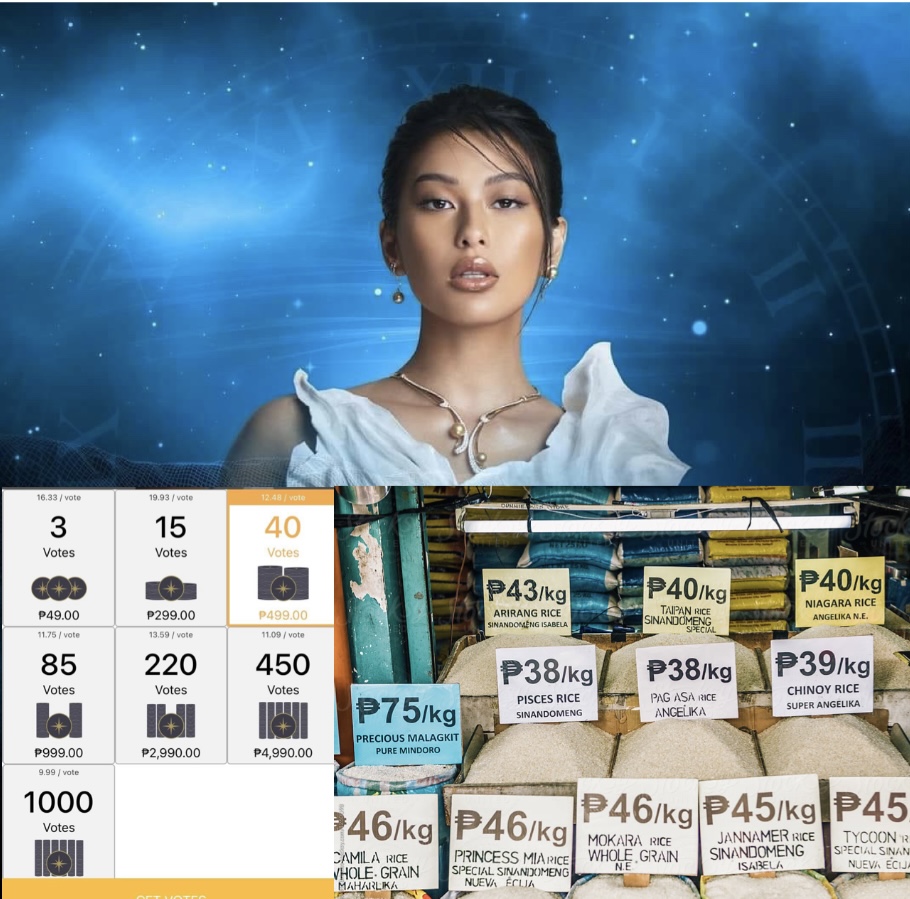
Ah, the Philippines, a nation where pageants and beauty queens reign supreme. It’s not just an event; it’s practically a national sport. The Philippines takes its beauty queens seriously, and I mean very seriously. So seriously, in fact, that some Filipinos would rather spend their hard-earned money on voting for Miss Philippines than on, well, something as mundane as rice.
In this peculiar land of beautiful smiles and perfectly coiffed hair, the pursuit of the crown is not just a matter of national pride; it’s a way of life. The entire country seems to come to a standstill when a beauty pageant is on, and the lengths people will go to support their favorite contestants is nothing short of awe-inspiring.
Now, you might be wondering what’s so wrong about this admiration for beauty queens. After all, it’s great to celebrate talent and beauty, right? Well, yes, but when the admiration takes precedence over basic necessities like food, we have a bit of a problem.
Consider this: in the Philippines, you can cast your vote for your favorite beauty queen by purchasing votes. Yes, you heard that right. You can actually buy votes to help ensure your chosen Miss Philippines makes it to the semi-finals. The irony? It costs money to vote, and that money could be better spent on, say, rice.
Let’s break it down. In this bizarre beauty pageant ecosystem, three votes can get you a kilo of rice with some change left over. Three votes! And that’s not all. If you’re feeling generous and decide to go all-in, 1000 votes can get you five 50-kilo bags of rice. That’s a lot of rice, folks.
But no, the allure of the beauty pageant is just too strong. Many Filipinos willingly part with their hard-earned cash, which could feed their families, just to see Miss Philippines inch closer to the crown. The idea of using that money to secure a stable food supply? Well, that’s just not as thrilling.
It’s almost as if the nation is collectively saying, “Who needs rice when we can have a tiara instead?” There’s something inexplicable about how beauty queens captivate the Filipino imagination. Maybe it’s the glamour, the glitz, or the chance to root for a local hero. But at what cost?
So, the next time you see a Miss Philippines contestant on the screen, bedazzled in sequins and sparkling under the spotlight, remember that there’s a Filipino somewhere deciding whether to vote for her or buy rice. And in this surreal pageant-obsessed world, rice might just come second to the glittering allure of the crown. Beauty queens may be majestic, but a hearty meal is just as beautiful.



 The Adobo Chronicles
You must be logged in to post a comment.