
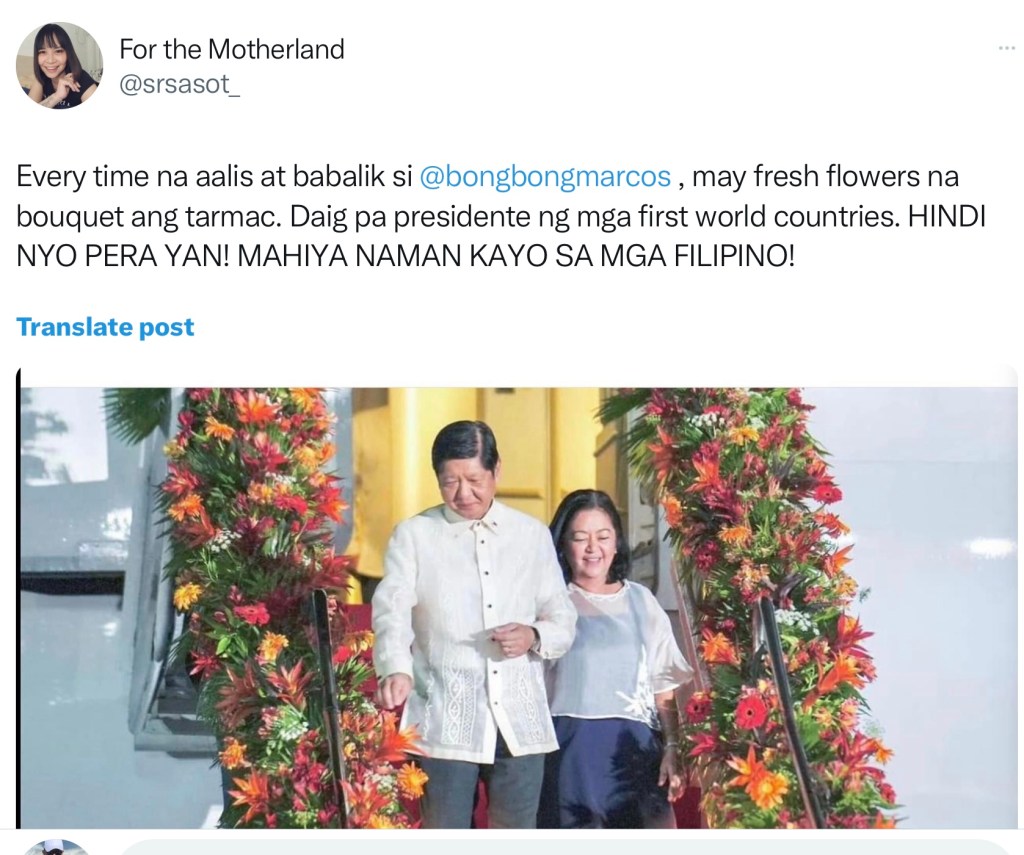
Sass Rogando Sasot’s tweet questioning the presence of fresh flowers adorning the “tarmac” upon President Bongbong Marcos’ return from a foreign trip raises intriguing points about the nature of ceremonial gestures.

(But first, she can’t seem to tell the difference between the tarmac and the aircraft boarding and deplaning stairs, or between a bouquet and flower decoration.)
While Sasot’s inquiry may prompt reflection on the allocation of resources, it’s essential to consider the broader context.
Comparisons to weekly church altar flower arrangements or the customary presentation of flower bouquets to dignitaries, and feteing heads of state with military honors highlight the prevalence of such practices in various settings.
Critics may argue that such displays are unnecessary and could be perceived as extravagant, especially in challenging economic times. However, proponents might emphasize the symbolic value and tradition embedded in these gestures, conveying respect, protocol and hospitality.
As discussions unfold, it becomes crucial to strike a balance between fiscal responsibility and preserving cultural norms that contribute to diplomatic courtesies and ceremonial traditions.
Sasot’s inquiry opens a dialogue about the appropriateness of such displays, urging a nuanced examination rather than outright dismissal of these age-old practices.
 The Adobo Chronicles